Engagement score protections
Last updated: July 1, 2026
For how anonymity works in general, see How does Teamspective ensure anonymity in Engagement surveys?
Small group protection
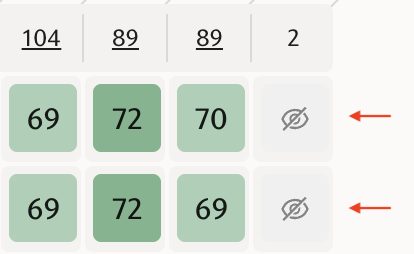
The response count is below the redaction limit. The highest applicable limit is chosen from the attributes in filtering and pivoting choices.
Example: The "Department" attribute requires 3 responses and the "Gender" attribute requires 5. When filtering by Department and pivoting by Gender, the higher limit of 5 is selected.
Subtraction protection
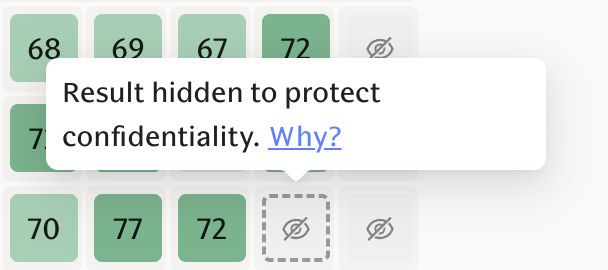
The group itself would not need to be redacted, but is hidden to protect another group. That group is below the redaction limit, but can still be worked out by subtracting other groups' results from the total. This result is hidden to prevent this. The group chosen for this additional redaction is typically the second-smallest group in the view.
Example: Sales (7), Engineering (5) and Marketing (2) answer a question. Marketing is hidden for being too small. But if Sales, Engineering and the company total stay visible, Marketing's answers can still be calculated by subtracting the others. To prevent this, Teamspective can hide one more group so the small one cannot be recovered.
Hierarchy protection
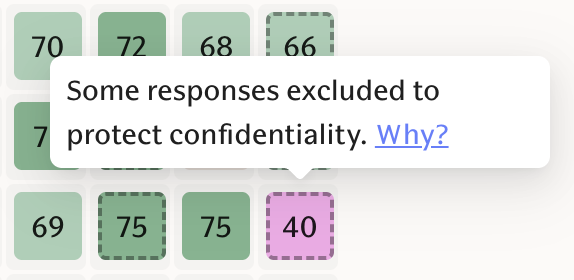
A parent group, such as a department, contains people who are not part of its sub-groups. An example might be a department head who is not part of any team within the department. Their answers can be worked out by subtracting the teams' results from the department's. To prevent this, their answers are excluded from the department results.
Example: A department of 12 is shown next to its two teams (7 and 4). Subtracting the teams leaves 1 person: the department's direct member. To keep that person's answers from being exposed, Teamspective may leave the direct members out of the department's published score and show the "some responses excluded" note.
Frequently asked questions
Why does a redaction change across views?
The redactions depend on the respondent counts after applying your specific filters. This means a group may appear protected or unprotected depending on the view.
Why are questions redacted differently than themes or KPIs?
KPIs and themes often have longer aggregation windows than questions, combining answers over a longer period of time. A full set of answers has more opportunities for subtraction and hierarchy compromises, which means it is more likely for protections to kick in.
Why do different users see different redactions?
Redactions are calculated separately for each person viewing the results, based on the groups that person already has access to. This ensures the most useful results possible while still protecting confidentiality.
Why are changes to redaction limits not being immediately reflected?
To prevent misuse, the limits do not change retroactively – they are "locked in" for published surveys. If you need to apply retroactive changes, please contact support.